




- SERVICES
- Frontend development
Frontend development
First impressions count
Business-critical web applications are used daily by employees or customers. That's why it's crucial to ensure a high-quality digital interaction. Frontend development plays a key role in achieving this.
A Frontend Developer creates the visual and interactive elements of web applications that users see and interact with. It is not just about creating attractive designs, but also about optimizing the user experience (UX/UI). We also focus on responsiveness across different devices, especially when tablets or mobile devices are involved.
Our frontend development solutions
At SIENN, we understand that frontend development is key to more efficient use and a smoothly operating organization. We ensure that our frontend development solutions are visually appealing, functional, and user-friendly. In our view, web applications should exceed user expectations and create consistency within your overall system landscape. We support you with a wide range of solutions and capabilities to ensure your web applications run seamlessly. For example:
Responsive web design
Web applications that automatically adapt to different screen sizes and devices, such as desktops, tablets, and smartphones.
User interface (UI)
The graphical elements and layout of a web application, including buttons, menus, forms, and other interactive elements.
Cross-platform development
Mobile applications that run on multiple platforms, such as iOS and Android, using frameworks like React Native.
Interactive web applications
Complex web applications with advanced interactive features, such as real-time updates, drag-and-drop functionality, and animations.
Single Page Applications (SPA)
Web applications where content is dynamically loaded on a single page, without requiring a full page refresh each time.
Progressive Web Apps
(PWA)
Web applications that behave like mobile apps, including offline access, notifications, and an app-like user experience.
Cross-browser compatibility
Consistent display and functionality of a web application across different web browsers such as Chrome, Firefox, Safari, and Edge.
Accessibility
Accessibility features that ensure people with visual or motor impairments can use the web application without difficulty.
The frontend development process in 4 steps
When we start working on the frontend of your web application, we always follow a structured process for custom software design and development. This process consists of four steps. By going through these steps, we ensure that the final result is both visually appealing and functionally effective.
Step 1 | Design and planning
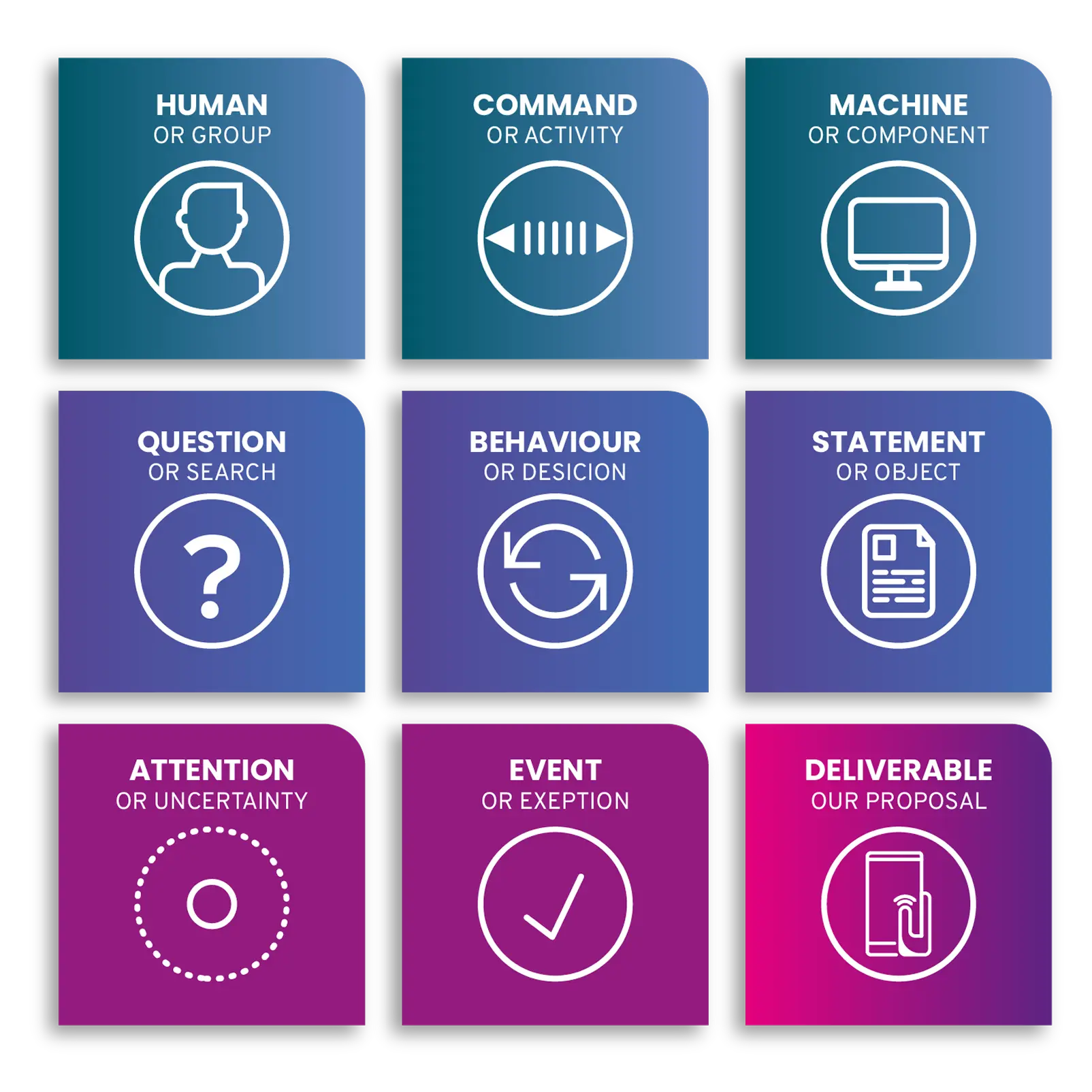
In the first step of the frontend development process, we look at your business strategy. For this, we use our Event Storming Roadmap. Together, we define how the application will look and which functionalities are essential. We design the user interface, determine the navigation structure, and plan the interactive elements. We believe that a well-considered design forms the foundation for a positive user experience.
Event Storming: the path to Domain-Driven Design
Event Storming is a fast and effective way to develop a business domain model for your project. Instead of delivering a business model in weeks, we can do so within hours. We make sure the other stakeholders are quickly brought up to speed. We make the process engaging and effective, motivating participants to move forward. It is a behavioral model that we can implement and validate quickly.
Step 2 | Development
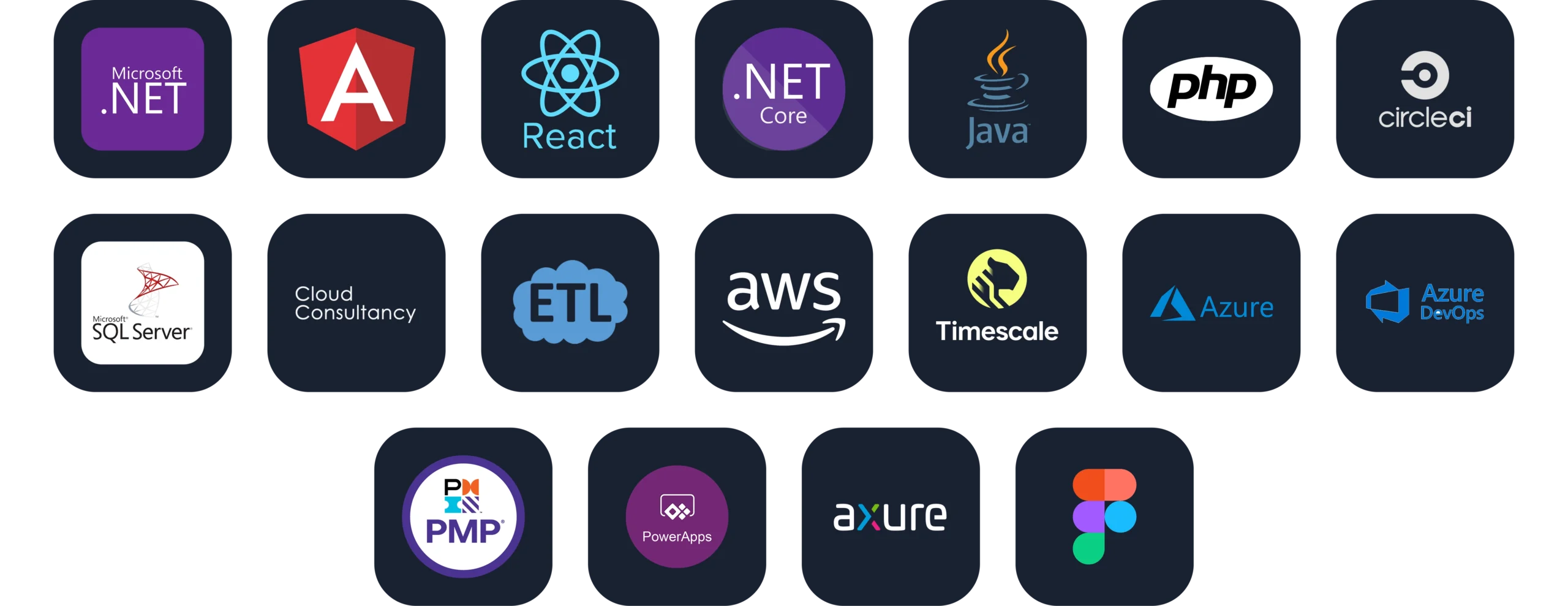
The development phase typically begins after the design team has created the user interface (UI). In this phase, the visual designs are translated into code. This is where the visual elements come to life and we implement responsiveness. Based on the frontend and backend development requirements, we use the technologies and systems shown below.
One of the essential aspects of frontend development is ensuring that the website or application is responsive. This means that the content adapts to different screen sizes, from desktop computers to smartphones. In addition, our frontend developers ensure that the site functions consistently and reliably across different web browsers, such as Chrome, Firefox, Safari, and Edge. This allows as many users as possible to access the application.
In this phase, we also add interactive elements to the website or application. These can range from simple buttons and forms to more complex features such as real-time updates, animations, and drag-and-drop functionality. We do this to increase user engagement and provide an intuitive user experience.
Step 3 | Testing and debugging
As the frontend code is developed, it is thoroughly tested and debugged. We review the code for errors and ensure everything runs smoothly. We also test compatibility across different devices and web browsers to make sure the site performs consistently and reliably everywhere.
Step 4 | Implementation and maintenance
Once the code is completed and tested, it is time to move everything into production. We deploy the code to the web or server hosting environment and configure all required settings. Once this is successfully completed, the website or application can be officially launched. After launch, it is important to maintain and update the website or application regularly. This ensures it continues to meet evolving user needs and advances in software application development. For example, we resolve new bugs, update content, and improve performance.
Matching more than 50,000 applicants with employers
That is Duijndam’s highest priority.
For the company, managing all the paperwork, approvals, and other details for each candidate during a recruitment process filled with time-consuming administrative tasks
was a major challenge.
The goal was to create an intelligent system that would make the recruitment process more efficient. To achieve this, we translated advanced business logic into a complex online solution.
The platform also needed to integrate with external services and enable users to manage large volumes of data. SIENN created a multifunctional platform where all required recruitment data can be stored and managed.
“Thanks to SIENN, we now have an innovative platform available in three languages: NL, PL, and EN. It stores the data of thousands of applicants. By using full-text search, we can easily search for specific details about individuals. We are now able to manage all paperwork online. SIENN provided system integration, ensuring the entire recruitment process runs seamlessly. We now operate on a platform with real-time notifications, advanced search filters, e-signatures, and other unique functionalities. This solution has given our company a real boost, allowing us to focus more on interviews with candidates.”
– John Helderman from Duijndam
Need a frontend developer?
Let SIENN take care of it
Building a strong frontend requires more than technical skills alone. A solid understanding of design principles and user behavior is just as important.
That’s where SIENN can help. We believe in close collaboration with our clients to fully understand and realize their vision.
Our process starts by listening carefully to your needs and objectives. Together, we conduct a thorough business analysis before moving into the design phase. From there, we design and develop a frontend solution that is both visually appealing and functionally effective. SIENN has a team of experienced frontend developers specialized in creating high-quality digital experiences across custom software development services. Whether you want to optimize your business-critical web application or develop a new one, we have the expertise to make your project a success.

What can we do for you?
Get in touch with us to explore opportunities or request an intake.